

Steps To Success As An
meet escoffier chef-in-residence
Kristen Kish is the host of Top Chef and Escoffier’s new Chef-in-Residence. Chef Kish will help inspire Escoffier students through a special lecture class, exclusive content, and other engagement activities. About Kristen Kish
Did you Know?
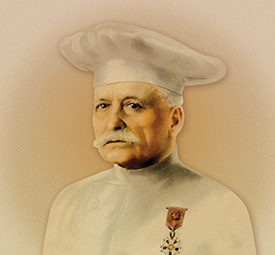
Auguste Escoffier was known as the King of Chefs and the Chef of Kings!
His contributions to the culinary world include, but are not limited to: creating the concept of à la carte menus, designing the five mother sauces, promoting farm-to-table cuisine, and instituting sanitation standards. His influence on cuisine is felt in kitchens across the world nearly a century later!


BEST COLLEGES FOR CULINARY ARTS
Ranked one of the Best Colleges for Culinary Arts in America in 2026 by Niche.com


*Based on comparable student population data for Austin and Boulder as currently reported in Integrated Postsecondary Education Data System (IPEDS).
“This was the best decision of my life! I have my degree and am working at opening my own bakery. My life feels more complete now. Thank you, Escoffier, for helping make my dreams come true!”*
Katie Harris, Baking & Pastry Arts Graduate & Head Pastry Chef at Oconomowoc Lake Club
Your Goals, Your Passion, Your Future
Our Mission
To cultivate passion and lifetime careers in culinary, hospitality and health by offering affordable, accessible and socially minded education and opportunities to learn.
Accreditations & Associations
We are the only U.S. accredited institution offering 100% online degrees with culinary classes and hands-on industry externships!1

U.S. DEPARTMENT OF EDUCATION RECOGNIZED AGENCY

COLORADO DEPARTMENT OF HIGHER EDUCATION

NATIONAL COUNCIL FOR STATE AUTHORIZATION RECIPROCITY AGREEMENTS

2026-2027 Military Friendly® School

2026-2027 Military Friendly® Spouse School
Our online programs are available through the Boulder campus. Auguste Escoffier School of Culinary Arts in Boulder, Colorado is nationally accredited by the Accrediting Council for Continuing Education and Training (ACCET).
It is also approved and regulated by the Colorado Department of Higher Education (CDHE), Division of Private Occupational Schools. Auguste Escoffier School of Culinary Arts (Boulder, CO) has been approved by CDHE to participate in the National Council for State Authorization Reciprocity Agreements (NC-SARA).

“The Escoffier Online education is a more accessible and affordable quality education available to a great many more people than the classic brick and mortar campus.”
Chef Jeremiah Tower, American Celebrity Chef & Father of California Cuisine
Curriculum
Fundamentals of Baking and Pastry
The Fundamentals of Baking and Pastry begins with course work concentrating on food safety and sanitation in the professional kitchen. The importance of proper hygiene, food handling and storage, cleaning, pest control and HACCP in a food service operation is explored. The course includes baking and pastry mixing methods and ingredient identification. The framework to understand the principles of the following cooking and baking techniques are taught: classic pastry doughs, pâte à choux, fried doughs, pies and tarts, baked custards and stove top custards, quick breads, scones, muffins, cookies, brownies and bars, as well as dessert sauces.
Patisserie
Patisserie begins with learning the classic meringue techniques that lead into the creation of European buttercreams. Students will learn classic mixing methods and piping skills. Specialty dessert cakes and decorated special occasion cakes are a major focus of this course work concentrating on factors related to the baking industry. Frozen desserts and plating are focused in this course. The course includes hand modeling techniques using rolled fondant, gum paste, marzipan, and modeling chocolate. The framework to understand the principles and techniques in the construction of putting together a wedding cake are also covered. Pastry and baking production timelines are examined in this course. Finally, students are introduced to sugar cookery and fresh fruit dessert items. This course provides instruction, examples, and guidance in the following areas: decorating classic European cakes, rolled fondant designed cakes, hand iced specialty cakes, ice cream and sorbet, candied fruit, gum paste flowers, marzipan and modeling chocolate.
Confiserie and Artisan Baking
Artisan Bread provides the framework to understand the principles of the following methods and techniques: the methods of pre-fermentation, biga, and sponge, starting and maintaining a variety of sourdough starters, extended fermentation, the steps of bread production, proper shaping, proofing and scoring, whole grain breads, Italian artisan breads, enriched breads, and special occasion/ holiday breads, puff pastry and laminated dough. Students will explore the proper techniques in buying, storing and melting chocolate, chocolate tempering, chocolate candies, truffles and pralines, nut based candies, cooked sugar based candies and sugar art showpiece design and execution, chocolate molding, chocolate finishing techniques, chocolate decorations, amenity design and execution, chocolate showpiece design and execution.
Global and Contemporary Cuisine
This course highlights modern considerations in the baking industry. Trends in diets and eating habits are constantly changing, and being able to stay on top of them is a key industry skill. Students also learn about cutting-edge trends in dessert composition and contemporary plating techniques, and how to stay current with those. In addition, the course explores different regions’ desserts, as well as their cultural significance and the historical influences that produced them.
Menu Design and Management
This course explores different types of menus and their applications. The course covers all aspects of menu planning and design, ranging from visual design to price analysis to making use of available resources. The menu is both a financial tool and a communication tool, and its use as both is explained. Students learn about both food and beverage menus.
Business and Professional Communications
The Business & Professional Communications course emphasizes the principles and practical application of effective professional communication behaviors within professional, business, and organizational contexts. In addition to identifying the importance of effective communication skills to the hospitality industry, communication styles and effective listening methods are addressed. Listening skills, verbal and nonverbal communication, conflict resolution, cultural differences in communication, and debate techniques are also covered.
Foodservice Math & Accounting
Foodservice Math & Accounting introduces students to managerial accounting concepts and explains their applications to specific operations within the hospitality industry. Emphasis is placed on how to administer accounting procedures to minimize costs and maintain a full range of customer services. After summary of the fundamentals of culinary math, an overview of basic business accounting transactions is covered including asset/liability accounts such as accounts receivable and payable, ledgers, balance sheets, payroll and financial statements.
Purchasing and Cost Control
Three out of five foodservice operations fail within five years of opening, often due to money mismanagement; this course gives students the skills to not only keep their restaurant in business but also turn a profit. This course introduces students to purchasing, receiving, inventory management and menu pricing. Students learn how to minimize costs and maintain a full range of customer services. The course progresses from the fundamentals of culinary math into an overview of storeroom operations, inventory, portion control, as purchased and edible portions, ingredient conversions, and recipe costing.
World History and Culture from the Culinary Perspective
Throughout history, food has done more than just provide nourishment. From prehistoric times to the present day, food and the pursuit of it has had a transformative role in human history. Food has impacted societal organization, industrial development, military conflict, and economic expansion. As epicure and gastronome, Jean-Anthelme Brillat-Savarin stated, “Gastronomy governs the whole of human man.” In addition, food also serves a role in the cultural development of religion, economics, and politics. This course examines the role of food and its contribution and influence over history, culture, religion, economics, and politics. Food customs and attitudes are also explored, as well as, the social awareness selected food patterns and customs.
Foodservice Management
This course covers the different types of commercial food service operations, and how to manage each using the principles of good service. Students study the hierarchy of management in food service, and the skills needed to succeed as a manager: training employees, motivating them, disciplining them, and creating a safe and positive work environment. The c ourse a lso e xplores h ow t o a ct responsibly and make decisions that benefit the company.
Technical Writing for the Hospitality Industry
Technical Writing for the Hospitality Industry, prepares students to write in the hospitality and foodservice professions. In a professional setting, writing provides readers information they need in a format they can understand. Unlike most academic writing, in which students demonstrate their learning to a professor who already knows the subject, in technical communication the writer is the expert, and the readers are the learners. In the hospitality and foodservice industries, students and professionals write a variety of documents for supervisors, colleagues, and customers such as explaining a problem or product, preparing a proposal, or illustrating a project. This course teaches students to adapt their writing to different audiences and purposes. This course outlines strategies for making subjects clear to readers who need to understand them. To communicate effectively with an audience, writing must meet rigorous editing standards, in addition to writing in a clear, concise style and presenting information logically.
The Science of Nutrition
In the Science of Nutrition course, the basic principles of nutrition are investigated. Emphasis is placed on the nutrients, food sources, and their utilization in the body for growth and health throughout life. Contemporary and global nutritional issues are also discussed.
Building Your Own Business
This course covers such topics as business planning, pricing, credit management, government regulation, legal concerns, and business ethics. Students learn how to manage and how to lead. For the final project for this course, the student will complete and present a business plan for a food service operation.
Pastry Industry Externship I
This course provides opportunities for real life experiences in an operational restaurant or related business and builds on the skills and techniques covered in previous courses. In the course, students apply the skills they’ve learned in practical ways to real-world situations. Students gain hands-on experience in the kitchen that mirrors their future work in the industry and develop the skills necessary for a culinary career. Immersion in a work environment also allows students to develop industry contacts and build working relationships.
Pastry Industry Externship II
This course provides opportunities for real life experiences in an operational restaurant or related business and builds on the skills and techniques covered in previous courses. In the course, students apply the skills they’ve learned in practical ways to real-world situations. Students gain hands-on experience in the kitchen that mirrors their future work in the industry and develop the skills necessary for a culinary career. Immersion in a work environment also allows students to develop industry contacts and build working relationships.
Students can first complete the Diploma in Professional Pastry Arts Program and then add the remaining course requirements to complete the Associate of Occupational Studies Degree in Baking and Pastry.
Completed Diploma in Professional Pastry Arts Program
The Business & Professional Communications course emphasizes the principles and practical application of effective professional communication behaviors within professional, business, and organizational contexts. In addition to identifying the importance of effective communication skills to the hospitality industry, communication styles and effective listening methods are addressed. Listening skills, verbal and nonverbal communication, conflict resolution, cultural differences in communication, and debate techniques are also covered.
*When a student completes the Diploma in Professional Pastry Arts online program prior to enrolling into the Associate Degree program.
Courses for Diploma in Pastry Arts Program consist of:
Fundamentals of Baking and Pastry I
Fundamentals of Baking and Pastry II
Menu Design and Management
Contemporary Pastry Arts
Global Pastry Arts
Purchasing and Cost Control
Foundations of Bread I
Foundations of Bread II
Foodservice Management
Confiserie
Cake Design and Decorating
Building Your Own Business
Pastry Industry Externship I
Business and Professional Communications
The Business & Professional Communications course emphasizes the principles and practical application of effective professional communication behaviors within professional, business, and organizational contexts. In addition to identifying the importance of effective communication skills to the hospitality industry, communication styles and effective listening methods are addressed. Listening skills, verbal and nonverbal communication, conflict resolution, cultural differences in communication, and debate techniques are also covered.
World History and Culture from the Culinary Perspective
Throughout history, food has done more than just provide nourishment. From prehistoric times to the present day, food and the pursuit of it has had a transformative role in human history. Food has impacted societal organization, industrial development, military conflict, and economic expansion. As epicure and gastronome, Jean-Anthelme Brillat-Savarin stated, “Gastronomy governs the whole of human man.” In addition, food also serves a role in the cultural development of religion, economics, and politics. This course examines the role of food and its contribution and influence over history, culture, religion, economics, and politics. Food customs and attitudes are also explored, as well as, the social awareness selected food patterns and customs.
The Science of Nutrition
In the Science of Nutrition course, the basic principles of nutrition are investigated. Emphasis is placed on the nutrients, food sources, and their utilization in the body for growth and health throughout life. Contemporary and global nutritional issues are also discussed.
Foodservice Math and Accounting
Foodservice Math & Accounting introduces students to managerial accounting concepts and explains their applications to specific operations within the hospitality industry. Emphasis is placed on how to administer accounting procedures to minimize costs and maintain a full range of customer services. After summary of the fundamentals of culinary math, an overview of basic business accounting transactions is covered including asset/liability accounts such as accounts receivable and payable, ledgers, balance sheets, payroll and financial statements.
Technical Writing for the Hospitality Industry
Technical Writing for the Hospitality Industry, prepares students to write in the hospitality and foodservice professions. In a professional setting, writing provides readers information they need in a format they can understand. Unlike most academic writing, in which students demonstrate their learning to a professor who already knows the subject, in technical communication the writer is the expert, and the readers are the learners. In the hospitality and foodservice industries, students and professionals write a variety of documents for supervisors, colleagues, and customers such as explaining a problem or product, preparing a proposal, or illustrating a project. This course teaches students to adapt their writing to different audiences and purposes. This course outlines strategies for making subjects clear to readers who need to understand them. To communicate effectively with an audience, writing must meet rigorous editing standards, in addition to writing in a clear, concise style and presenting information logically.
Pastry Industry Externship II
This course provides opportunities for real life experiences in an operational restaurant or related business and builds on the skills and techniques covered in previous courses. In the course, students apply the skills they’ve learned in practical ways to real-world situations. Students gain hands-on experience in the kitchen that mirrors their future work in the industry and develop the skills necessary for a culinary career. Immersion in a work environment also allows students to develop industry contacts and build working relationships.
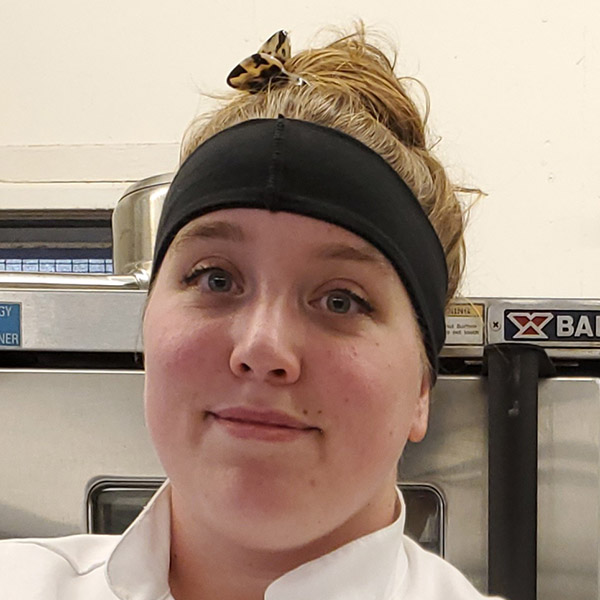
“The knowledge from Escoffier has given me the skills and confidence not only in my baking, but to take my baking and creations to the next level.”*
Trista Besecker, Online Pastry Arts Graduate
Program Highlights

HANDS-ON TRAINING

Entrepreneurial
Curriculum

CLASSIC &
CONTEMPORARY TECHNIQUES

PASTRY HANDS-ON INDUSTRY
EXTERNSHIPS

EXPERIENCED CHEF
EDUCATORS

CAREER PLANNING
AND PREPARATION

NATIONALLY ACCREDITED
Announcing: International Study Opportunities in France
Now Escoffier students can study at the renowned École Ducasse culinary institute in France and graduates can transfer credits towards a bachelor’s degree.

“The externship put me in a real-life situation and helped me further develop and hone skills that could really only happen on the job. As it turned out, one of my externship sites offered me a job, and I am now the pastry chef for a little café.”*
Jill Meredith, Baking and Pastry Arts Program
Tuition
Total Program Cost:
$33,435*
No Application Fee!
Financial Aid is available to those who apply and qualify
*The total program cost listed above encompasses tuition, tool kit, uniform, and an optional non-refundable technology fee if you do not already have a computer. As textbooks are delivered electronically, the cost of books used in the program and available online to the students are included in the tuition cost. For more cost details, refer to our catalog.
Professional-Grade Toolkits Featuring ZWILLING products
Carefully curated with essential cutlery and tools to help you hone your craft
A Typical Week at Escoffier
Approximately 15-23 hours per week is spent on school related activities depending on program, credential and personal pace.
The week runs from Wednesday to Tuesday with weekly due dates for student work.
Each week’s assignments will be broken into categories of learn, discuss and experience.
LEARN
Each week will begin with assigned reading via our online platform. Students will also watch the recorded chef demos for the week here.
DISCUSS
Students participate in discussion boards where the class responds to topics and questions the chef posts in regards to what you’re learning that week. There will also be live lessons held through a video platform each week. Live Sessions are your opportunity to interact with your chef and classmates. Students who attend or watch the archive generally perform better in school.
EXPERIENCE
This is where students turn their kitchen into their classroom lab, and cook! With all the prep work completed, students can now work through assignments by following our production sheet from start to finish, taking photos where instructed to.
How Chef Instructors Evaluate Student Dishes Online

“The skills that are taught in the Escoffier Online program are not only beneficial to someone wanting to work in the industry, but anyone who loves to bake.”*